
Console Table Dimensions Guide: Standard Height, Width & Depth for Living Rooms
Choosing a console table is not only about finding a design you like. Its height, width, and depth determine how comfortably it fits into the room, how it relates to the sofa or wall, and how much usable space remains around it.
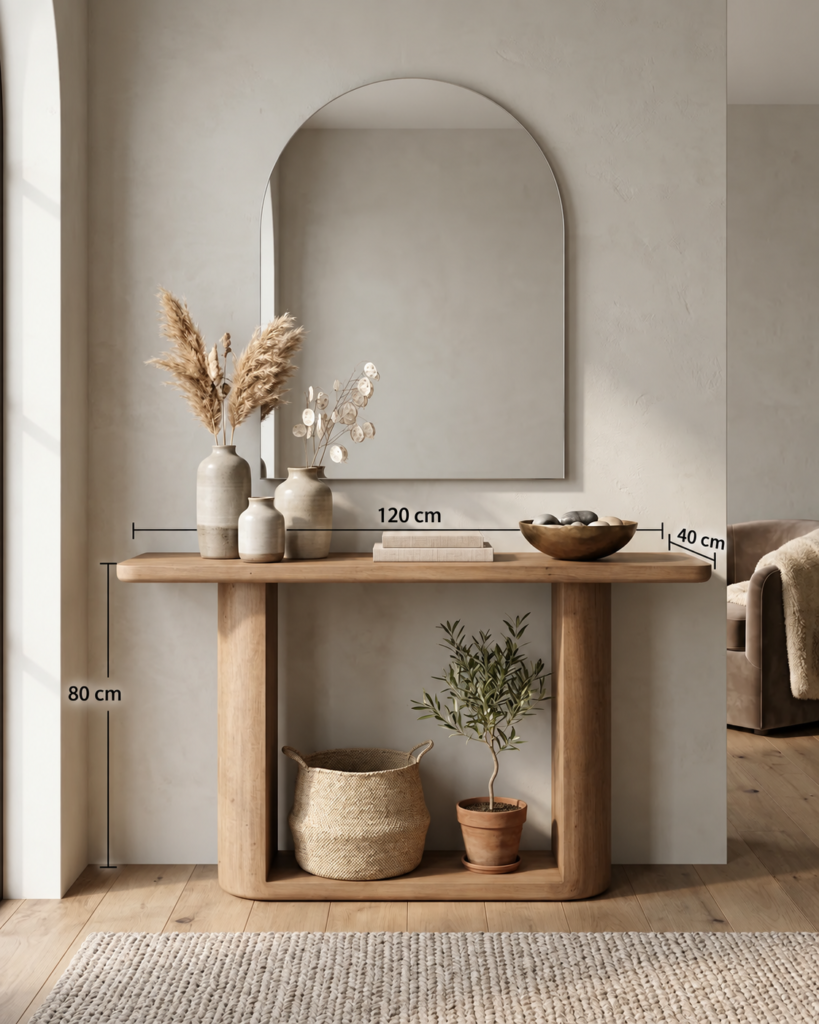
There is no single dimension that works for every home. However, for a living room console table, a height of around 76–80 cm, a depth of around 40 cm, and a width of roughly 120–140 cm is a useful reference point. For example, the Basal Console Table measures 120 × 40 × 80 cm, making it a practical reference for these proportions. These dimensions are also found across several designs in the current ELVM Homes console collection, although sculptural pieces may intentionally be wider, deeper, or lower.
The right dimensions ultimately depend on where the table will stand: against an empty wall, behind a sofa, in a compact living room, or as part of an open-plan space.
What Is the Standard Console Table Size?
There is no universal standard console table size, but many living-room designs are approximately 120–140 cm wide, 40–45 cm deep, and 76–80 cm high. The ideal dimensions should still be chosen according to the wall, sofa, and available circulation space.
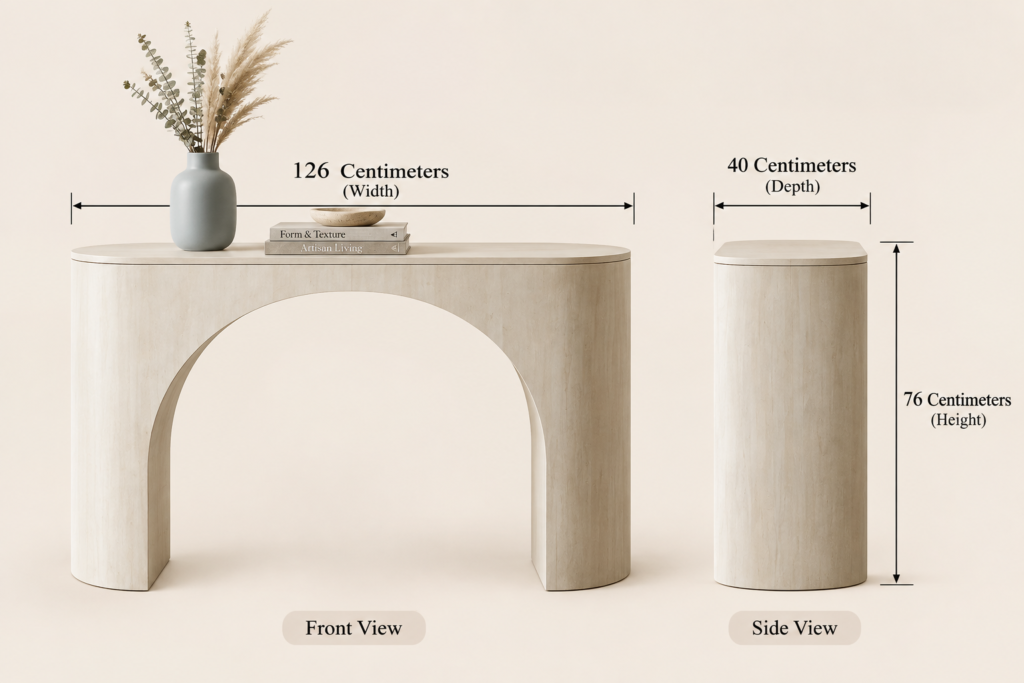
Within the ELVM Homes collection, for example, the Amber Console measures 130 × 40 × 76 cm, the Basal Console Table 120 × 40 × 80 cm, the Nimbus Console Table 126 × 40 × 76 cm, and the Notch Console 140 × 45 × 76 cm. This gives a useful picture of the proportions commonly used for a full-size contemporary console.
These measurements should be treated as a starting point rather than a fixed furniture rule. A narrow table for a compact room may be shallower, while a sculptural statement piece may be considerably wider or lower.
Console Table Dimensions at a Glance
For planning purposes, this is a practical way to think about console dimensions:
| Placement | Width | Depth | Height | Best For |
|---|---|---|---|---|
| Standard living-room console | Approx. 120–140 cm | Approx. 40–45 cm | Approx. 76–80 cm | Empty walls and decorative displays |
| Behind a sofa | Relative to sofa width | Approx. 25–40 cm | At or below sofa-back height | Open-plan living rooms |
| Compact living room | Approx. 80–120 cm | Approx. 25–35 cm | Approx. 75–80 cm | Limited floor area |
| Narrow hallway | Depends on wall length | Approx. 20–30 cm | Approx. 75–80 cm | Tight circulation spaces |
| Foyer or entryway | Approx. 100–140 cm | Approx. 30–40 cm | Approx. 76–80 cm | Entrance styling and everyday essentials |
| Sculptural console | Varies | Varies | Varies | Statement-led interiors |
These ranges are planning guidelines. Always measure your own room before choosing furniture.
What Is the Ideal Console Table Height?
For most living rooms, a console table height of approximately 76–80 cm creates a comfortable and visually balanced surface.
For most living rooms, a console table height of approximately 76–80 cm creates a comfortable and visually balanced surface.
Console Table Height for a Living Room
When a console sits against a wall, approximately 76–80 cm works well because it creates enough visual presence without approaching the height of larger storage furniture.
It also leaves useful vertical space above the table for a mirror, artwork, wall light, or decorative arrangement.
The proportions of the room matter too. In a living room with low-profile furniture, an unusually tall table may look disconnected. Conversely, a very low design can work beautifully when its form is deliberately sculptural.
What Height Should a Console Table Be Behind a Sofa?
A table behind a sofa should generally relate to the actual height of the sofa back rather than to a generic standard.
Ideally, its top should sit approximately level with or slightly below the sofa back. This keeps the two pieces visually connected and prevents the console from appearing to tower above the seating.
Before purchasing, measure from the floor to the top of the fixed sofa back. Do not use the height of loose cushions as your reference, since cushions can compress and change position.
Before purchasing, measure from the floor to the top of the fixed sofa back. Do not use the height of loose cushions as your reference, since cushions can compress and change position.
How Wide Should a Console Table Be?
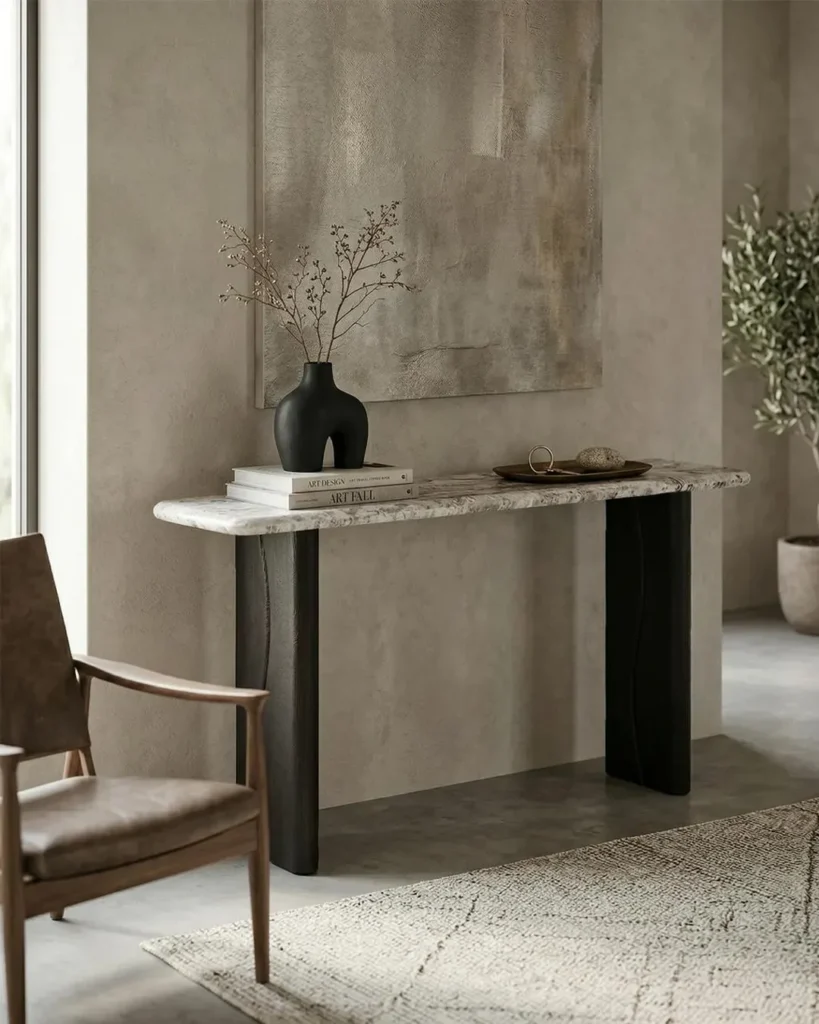
There is no fixed standard width because the correct measurement depends largely on the wall or furniture beside it.
Instead of trying to fill an entire wall, look for proportion. A console should have enough space around it to look intentionally positioned.
Add Your Heading Text Here
First measure the full usable wall area rather than the wall from corner to corner. Door frames, curtains, switches, sockets, radiators, and adjacent furniture can reduce the area available.
Then place the console visually within that usable width.
Leaving open wall space on either side usually produces a calmer and more balanced result than choosing a table that almost touches adjacent furniture.
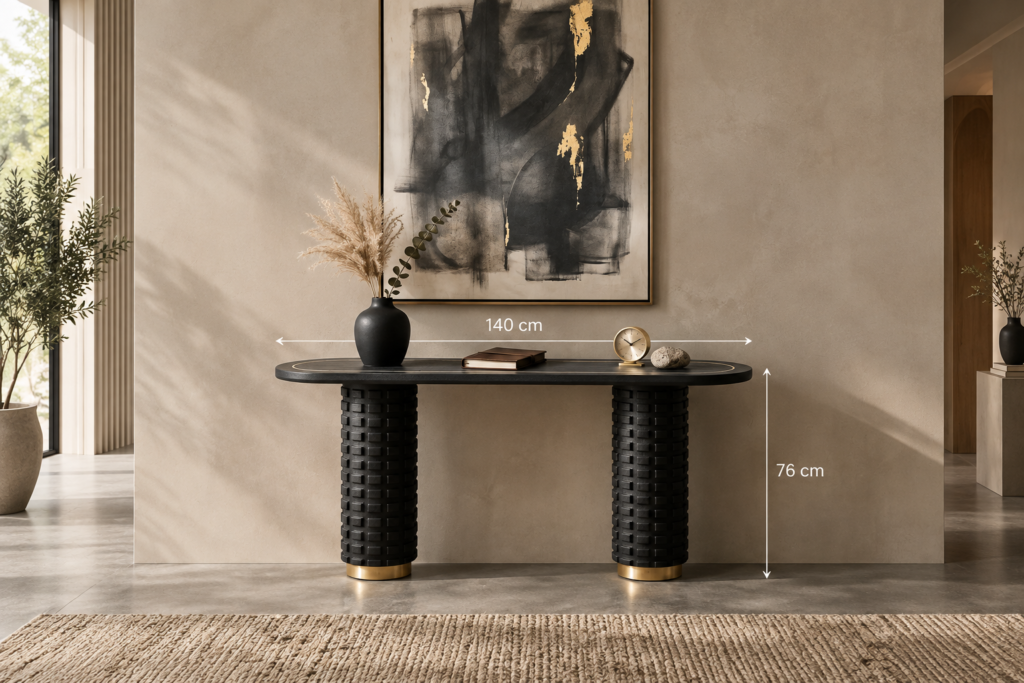
For a large blank wall, a wood console table measuring 140 × 40 × 76 cm (Width × Depth × Height) can provide enough visual presence to anchor artwork or a statement mirror without becoming as bulky as a cabinet.
When coordinating the surrounding furniture, you can also compare its scale with the coffee table collection to maintain balanced proportions across the living room.
How Wide Should a Console Table Be Compared to a Sofa?
For behind-sofa placement, the console should normally be narrower than the sofa.
Rather than following an exact percentage in every room, use the sofa as a visual frame. The table should sit comfortably inside the overall sofa width and leave space on both sides.
For example, behind a 210 cm sofa, a console around 130–150 cm wide may create a balanced composition. Behind a significantly wider sectional, a larger statement design may work better.
The objective is visual proportion, not filling every available centimetre.
How Deep Should a Console Table Be?
For a living room, a depth of approximately 30–45 cm provides a useful surface while maintaining the relatively slim profile that defines console furniture.
Depth becomes particularly important where people need to walk past the table. A few extra centimetres may make little difference against a large living-room wall but can noticeably affect movement in a hallway or compact apartment.
Best Depth for Small and Narrow Spaces
For a narrow console table, consider approximately 20–30 cm of depth when floor space is restricted. The exact number should be determined by the remaining passage rather than by the table alone. A 30 cm-deep console may work perfectly against one wall but feel intrusive in another room with a doorway or chair directly opposite it. If a console is primarily decorative, you may not need a very deep top. A lamp, vase, book, or small sculpture can be displayed comfortably on a relatively slim surface. For compact layouts, comparing the console with a smaller piece such as a side table can also help you understand how much floor space each furniture type requires.
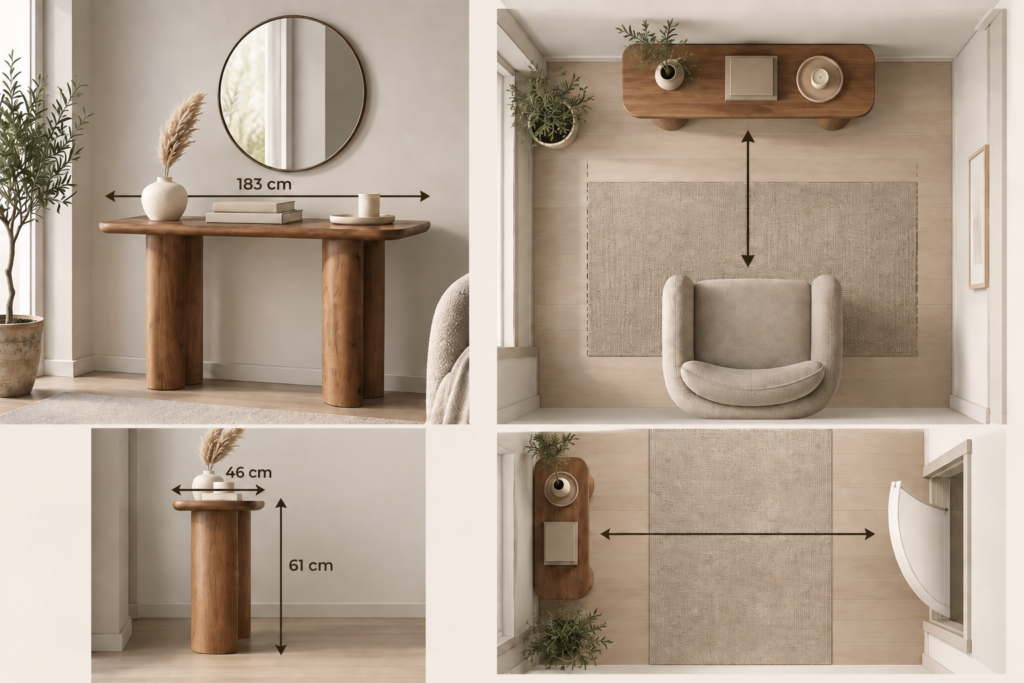
How Much Walking Space Should You Leave?
Measure the distance from the front edge of the table to the nearest sofa, chair, opposite wall, or other obstruction.
Around 90 cm of clear circulation space is a useful, comfortable target where people regularly walk past. In less frequently used areas, the available clearance may be smaller, but the route should never feel obstructed.
Also check whether doors, cabinets, or drawers open into the same space.
How to Measure Your Space Before Buying a Console Table
Getting the measurements right before you buy a console table helps avoid problems with scale, door clearance, and walking space.
Measure the usable wall width. Exclude door frames, curtains, radiators, and furniture that cannot be moved.
Measure the available depth. Mark the proposed front edge of the console on the floor so you can see how much room it will occupy.
Check the height. If the table will sit behind a sofa, measure the fixed sofa back from the floor.
Test circulation. Make sure people can comfortably walk between the console and surrounding furniture.
Consider what goes above it. A mirror, artwork, or wall light should relate visually to the width and position of the table.
A simple practical trick is to mark the proposed width and depth on the floor with removable tape. This gives you a much clearer sense of scale than looking at dimensions on a screen.
If the console will share a wall or visual zone with a TV unit, measure both pieces before buying so the overall arrangement does not feel overcrowded.
Real Console Table Dimensions from the ELVM Homes Collection
One of the best ways to understand console proportions is to compare actual products rather than relying entirely on generic sizing rules.
The current ELVM Homes collection includes both compact conventional proportions and larger sculptural forms.
| ELVM Design | Dimensions Listed | Material |
|---|---|---|
| Amber Console | 130 × 40 × 76 cm | Solid Mango Wood |
| Basal Console Table | 120 × 40 × 80 cm | Mango Wood & Sandstone |
| Nimbus Console Table | 126 × 40 × 76 cm | Mango Wood |
| Shale Console | 120 × 40 × 76 cm | Mango Wood & Morchana Marble |
| Notch Console | 140 × 45 × 76 cm | Mango Wood & Botticino Marble |
| Pebble Console | 120 × 40 × 76 cm | Mango Wood |
| Stirate Console | 120 × 40 × 76 cm | Mango Wood |
| Terra Trace Console | 130 × 40 × 76 cm | Mango Wood |
| Tessera Console | 140 × 40 × 76 cm | Mango Wood |
| Trave Brown Console | 130 × 40 × 80 cm | Mango Wood & Italian Travertine |
| Trigon Console | 120 × 40 × 76 cm | Mango Wood & Panther Marble |
| Sora Organic Curved Console | 183 × 46 × 61 cm | Mango Wood |
The comparison shows why a single “standard console table” measurement can be misleading. Many ELVM designs cluster around 120–140 cm in width, 40–45 cm in depth, and 76–80 cm in height, while Sora deliberately changes those proportions to create a lower, wider sculptural form.
That difference is part of the design rather than a sizing problem.
Common Console Table Sizing Mistakes to Avoid
Choosing Width Without Checking Depth
Width gets most of the attention because it determines how the table looks against the wall. But in everyday use, depth often matters more.
A wide table can work beautifully if it remains close to the wall, while a comparatively small table can become inconvenient if it projects too far into the room
Ignoring Sofa Height
When positioning a console behind seating, choosing the height without measuring the sofa can create an awkward stepped effect.
Use your actual sofa dimensions rather than assuming every sofa has the same back height.
Forgetting About Door and Drawer Clearance
This matters particularly for an entryway or a living room close to a balcony door.
Marking out the furniture footprint beforehand makes it easier to identify potential conflicts.
Find the Right Console Table for Your Living Room
The right dimensions create a balance between function, circulation, and visual proportion.
For many living rooms, a console around 120–140 cm wide, 40–45 cm deep, and 76–80 cm high is a useful place to begin. From there, adjust the dimensions according to your sofa, wall length, room size, and the role you want the furniture to play.
Explore the ELVM Homes collection to compare wood, marble, sandstone, travertine, and statement console designs created for contemporary interiors.
Frequently asked questions
1. What is the standard console table height?
A console table height of around 76–80 cm works well for many living-room applications. Several current ELVM Homes designs fall within this range, although lower sculptural pieces are also available. The best height should ultimately relate to the surrounding furniture and placement.
2. How deep should a living room console table be?
Around 30–45 cm deep is a practical range for many living rooms. Several ELVM consoles use a 40 cm depth, while deeper or slimmer designs can work depending on the available floor space. Always check how much walking room remains in front of the table.
3. How wide should a console table be behind a sofa?
A console placed behind a sofa should generally be narrower than the sofa and visually centred within it. Rather than following one fixed percentage, choose a width that leaves visible space on both sides and feels proportionate to the seating.
4. What size console table works best in a small living room?
For a small living room, prioritise depth before width. A shallow or narrow console of approximately 20–35 cm deep can save floor space while still providing a useful display surface. Keep enough clearance around the table for comfortable movement.
5. What are the most common ELVM Homes console table dimensions?
Several ELVM Homes consoles are listed around 120–140 cm wide, 40–45 cm deep, and 76–80 cm high. Examples include the Amber Console at 130 × 40 × 76 cm, the Basal at 120 × 40 × 80 cm, the Shale at 120 × 40 × 76 cm, and the Notch at 140 × 45 × 76 cm. Sculptural designs such as Sora use different proportions.