
Showing all 15 results
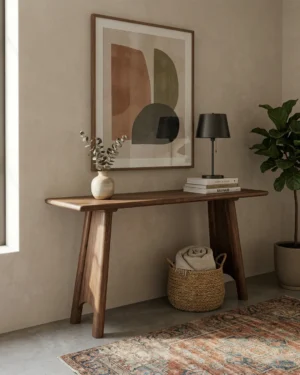
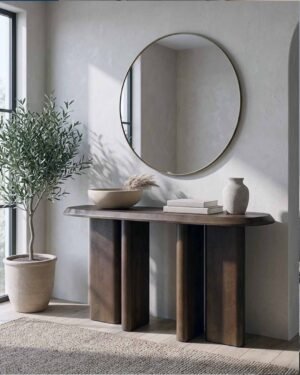
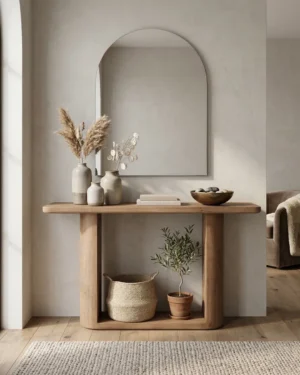
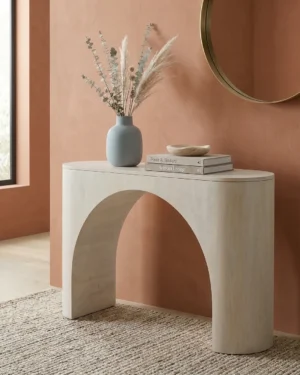
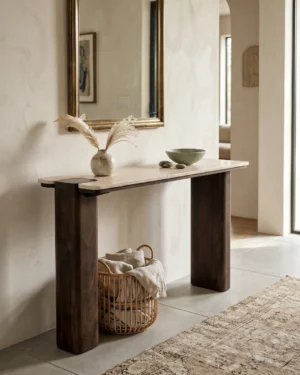
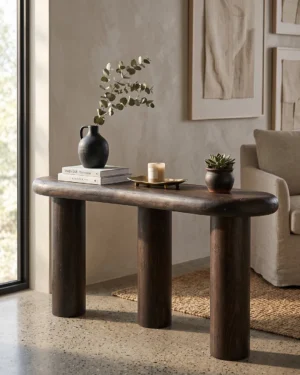
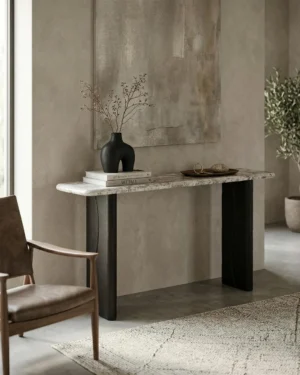
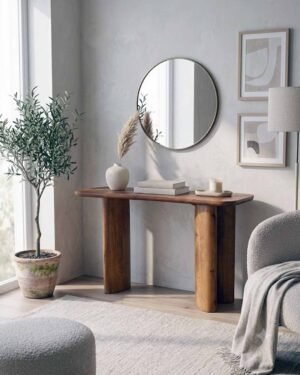
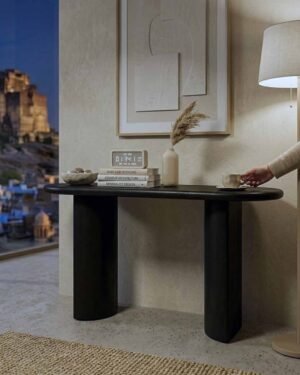
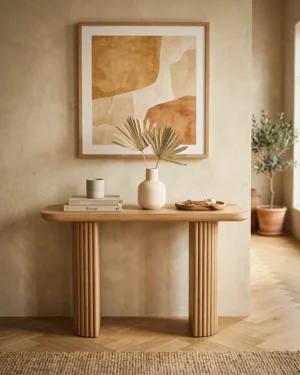
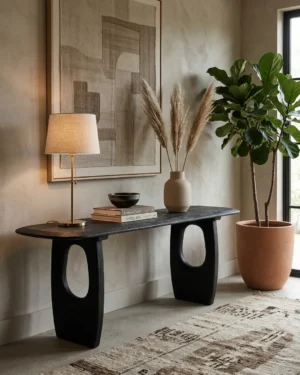
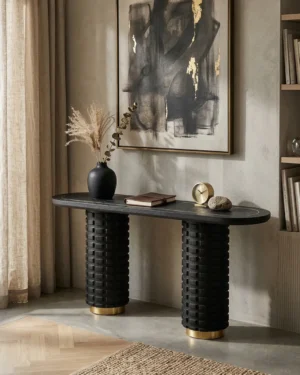
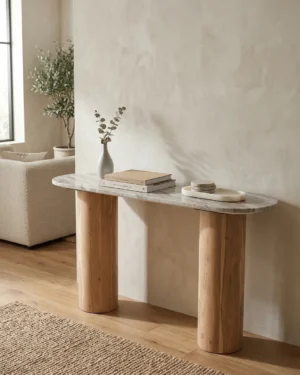
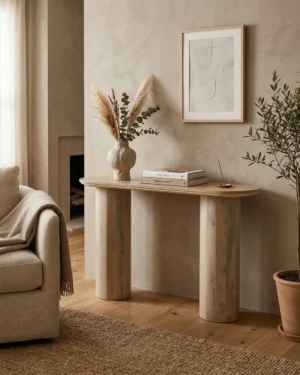
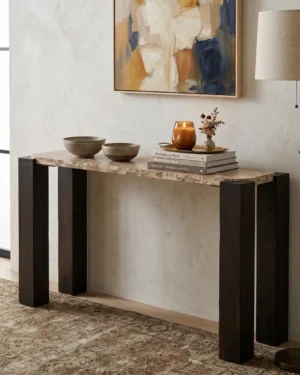
A console table is one of those quiet workhorses of home decor, narrow enough to hug a wall, useful enough to hold your keys, a lamp, or a stack of books, and striking enough to be the first thing a guest notices when they walk in. At ELVM Homes, every console table is handcrafted in Jodhpur using solid mango wood, marble, and natural stone, built for Indian homes that want furniture with real weight and character, not flat-pack pieces that wobble within a year.
Whether you're searching for a statement living room console table, a warm wood console table, a space-saving narrow console table for a tight hallway, or an elegant entryway console table, this collection is built to complete a room, not just fill a wall.
A console table is a slim, freestanding table designed to sit flush against a wall rather than in the middle of a room. Its narrow depth, usually 10–16 inches, makes it suitable for areas where a deeper table or cabinet would take up too much room.
Unlike a side table (built to sit beside a sofa or armchair, at arm's reach), a console table stands alone as its own piece of console furniture.
Console tables are commonly used in:
A console can support decorative objects, lamps, books, mirrors, artwork, and everyday essentials like keys and mail, all without eating into a room the way a larger table would.
The best living room console table is one that suits the proportions of the room, complements the surrounding furniture, and gives you enough surface space for its intended use.
Against an empty wall, a living room console creates a focal area for artwork, mirrors, or decorative lighting. Placed behind a sofa that isn't pushed against a wall, it creates a natural boundary between your living and dining areas and gives you a surface for a lamp, a vase, or framed photos.
A living room wall table with clean proportions works well when you want the room to feel open and uncluttered. If a larger living room has the space to spare, a more sculptural console unit with a marble top and sculpted base can become a genuine statement feature.
Explore more living room furniture, including TV units, to complete the space.
For a hallway or entrance, choose a console table with dimensions that give you useful surface space while still leaving room for comfortable movement.
In narrower Indian hallways, a narrow console table or slim console table, typically 10–14 inches deep, is the right call, since it sits close to the wall without blocking the walking path. When selecting a hall table design, also think about what will sit above it: a mirror, artwork, or wall light visually connects the table to the wall and completes the composition.
An entryway console table performs a similar role near the front door. Pairing an entrance console table with a mirror above it and a small bowl for keys turns a bare entrance into a functional, welcoming first impression. Larger homes may suit a bigger foyer table, while compact foyer console tables work better where floor area is limited.
A wood console table introduces natural warmth, texture, and tonal variation into an interior. Wood pairs particularly well with upholstery, stone, marble, and neutral finishes, making it adaptable to different contemporary schemes.
A wood console crafted from Solid Mango Wood, a dense, sustainably grown hardwood, shows visible natural grain that only gets richer with age, and holds up well to daily use. That's why mango wood is the backbone of most of our console and coffee table ranges.
Wood also pairs beautifully with more architectural, stone-led materials:
For interiors that want stronger contrast, a black console table creates a distinctive silhouette, particularly against a lighter wall.
This is one of the most-searched questions before buying a console table, and the answer is fairly consistent: the standard console table height is 28 to 32 inches (71–81 cm). That range isn't arbitrary; it roughly matches the back height of a typical Indian sofa, so a console placed behind one sits level with it instead of visually competing.
A few practical rules for getting the size right:
Before choosing a piece, measure your wall width, available floor depth, nearby furniture height, and the walking space you need around it.
Start with one main focal element and build the arrangement using objects of different heights and scales. A mirror or piece of artwork above the console table creates a visual anchor; a lamp or tall vase then adds height, while smaller objects books, bowls, sculptures add variation across the surface.
Avoid filling every part of the tabletop. Leaving visible space lets the console's own material and form contribute to the composition.
For an entrance console table, a tray or decorative bowl for keys and everyday essentials adds function without clutter. A living room console can be styled more decoratively, using objects that echo the textures or tones already in your sofas, rugs, and lighting. With a particularly sculptural console unit, fewer accessories are usually more effective; the furniture itself does the work.
Yes. A bedroom console table, kept slightly shorter at 28–30 inches, works well as a dressing surface, a spot for a jewellery or perfume tray, or an extra display shelf, especially in rooms too small for a full dresser.
A wall console can also make use of an alcove or an otherwise empty stretch of wall where deeper furniture would be impractical. And within an open-plan layout, a living room console placed behind a sofa can establish a visual boundary between functional areas while keeping the room open.
A thoughtfully chosen console table brings balance, material interest, and purpose to an interior. It can complete an empty living room wall, make a hallway more inviting, establish a refined entrance, or provide an extra surface within a bedroom.
Every piece in this collection is handcrafted in Jodhpur, from Solid Mango Wood to Italian Travertine and Botticino Marble, built for Indian homes and delivered PAN-India. Choose a wood console table for natural warmth, a sleek console table for a streamlined contemporary look, or a black console table when the room calls for stronger contrast. For compact spaces, a narrow console table keeps circulation comfortable; in larger interiors, a sculptural console unit becomes a focal feature.
Whether you want to buy a console table for your living room, find an elegant entryway console table, or introduce a distinctive hallway table, browse the collection below and filter by material, size, or finish to find the one that fits your wall.
A console table is a slim display and functional surface used in living rooms, hallways, foyers, entrances, and bedrooms. It holds lamps, books, mirrors, artwork, vases, and everyday items like keys and mail, adding structure to an otherwise unused wall or corner.
Most console tables stand between 28 and 32 inches (71–81 cm) tall, roughly matching the back height of a standard sofa, which is why they work so well placed behind one.
A side table sits next to a chair or sofa, at arm's reach for seated use. A console table is a standalone piece placed against a wall in an entryway, hallway, or behind a sofa and is usually longer and narrower.
A narrow console table or slim console table, around 10–14 inches deep, is the most suitable option. Its reduced depth gives you a display surface while keeping the walking path clear.
Keep at least 90 cm (about 3 feet) of clear floor space in front of any console table placed in a hallway, entryway, or other walkway.
Yes. A bedroom console table, kept slightly shorter at 28–30 inches, works well as a dressing surface, a jewelry and perfume tray stand, or an extra display shelf in rooms too small for a full dresser.
Neither is objectively "better"; it depends on the look and upkeep you want. Solid mango wood is warmer, more forgiving of daily knocks, and needs occasional oiling. Marble and natural stone (Botticino, Morchana, Travertine, and Sandstone) bring a cooler, more formal finish and need only a simple dry wipe but are heavier and less forgiving of sharp impacts.
Yes. A wood console table adds natural texture and warmth to contemporary interiors. Wood pairs well with marble, stone, metal, neutral upholstery, and modern lighting for a balanced mix of natural material and clean design.