
Showing all 10 results
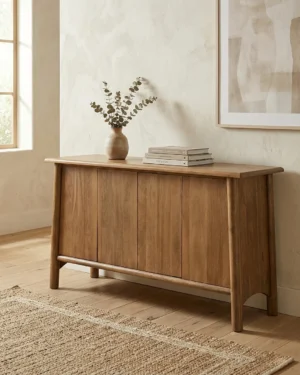
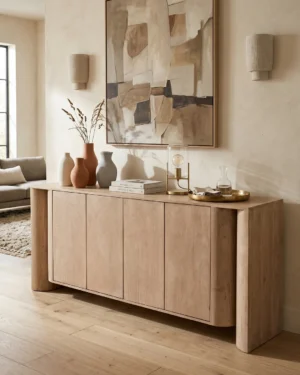
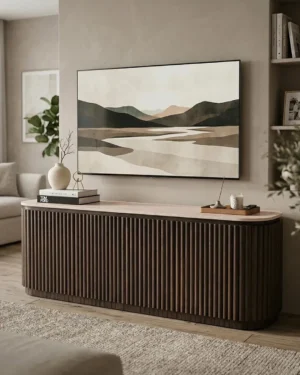
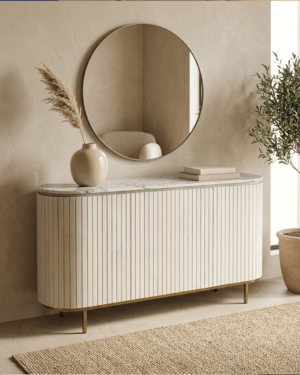
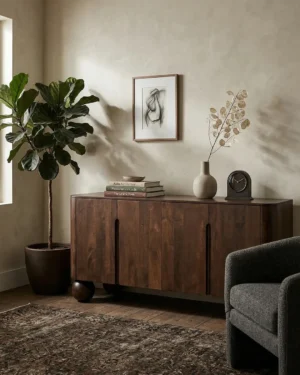
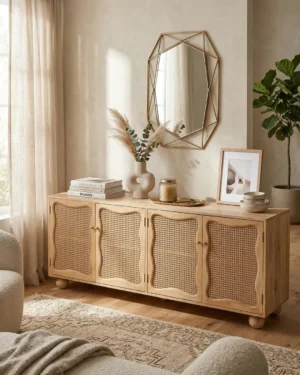
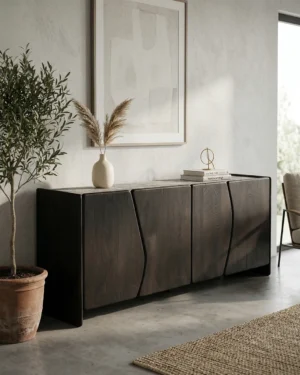
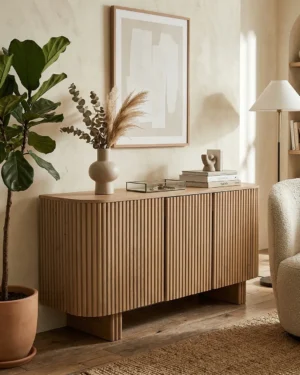
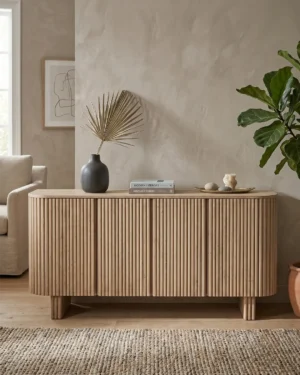
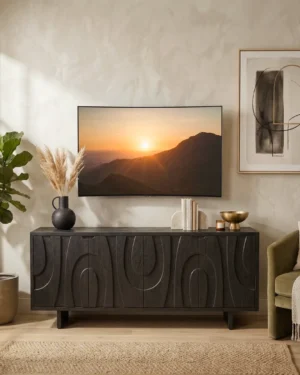
ELVM Homes sideboards are low, wide storage cabinets made for Indian dining and living rooms. This collection has 10 designs, from fluted and cane-panelled to handleless. Each offers closed storage for tableware, serving pieces, and everyday items. The top surface can hold lamps, a tray, or a few favorite objects. Browse the sideboard cabinets below, compare sizes and finishes, and pick the one that fits your wall and your storage needs.
ELVM sideboards share a clean, contemporary shape but look quite different up close. Here are three you can compare.
| Model | Size (W × D × H) | Material | Finish | Doors |
|---|---|---|---|---|
| Ripple | 180 × 45 × 76 cm | Solid mango wood | Vanilla Ash | 4 cane panels |
| Amber | 160 × 45 × 76 cm | Solid mango wood | Chestnut | 4, handle-less |
| Straight 3-Door | 153 × 40 × 76 cm | Mango wood | Honey Oak | 3, fluted |
A sideboard works well in both rooms. In a dining room, it keeps plates, serving bowls, and table linen close to the table, so you don’t have to walk to the kitchen again and again. The top can hold hot dishes at serving time. This makes it a useful piece of dining room furniture.
In a living room, a sideboard hides everyday items like board games, extra cushions, and tea sets. Keep the top simple: a lamp and one or two objects look better than a crowded surface. If you want a narrower piece for an entryway or hallway, see our console tables.
Start with three checks: the wall width, the depth, and how you plan to use the storage. Then match the finish to your room.
Measure the wall where the sideboard will stand, then choose a width that leaves a small gap on each side. Check the depth too. The ELVM designs above are 40-45 cm deep, which suits most dining rooms and hallways. All three are 76 cm high, a comfortable height for serving.
Leave enough space in front so the doors can open fully. Also check that the sideboard won’t block a socket, switch, or window.
Think about what you will store. Plates and serving dishes need stable shelves. Larger items need open space. Check each product page for the door count and configuration.
A wooden sideboard has natural grain and color variation, so no two pieces look exactly alike. Keep it away from direct sunlight and heat, and wipe spills quickly. Each product page lists care instructions.
A sideboard is a low, wide cabinet for general storage and serving. A crockery cabinet is mainly for tableware and is often taller or built for display. Sideboards usually sit at waist height, with a flat top you can use. Crockery cabinets may have glass doors, open shelves, or a tall frame.
The two overlap. You can store crockery on a sideboard, and some crockery cabinets are low and wide. Choose by how much you need to store and how much display space you want.
ELVM focuses on quiet, contemporary design. The details are on the page: mango wood, clear dimensions, named finishes, and a care guide for each design. The product pages list free shipping and a 24-month warranty. Dispatch is listed as 15-20 days, and the Milo Side Board is marked Ready to Ship. If you’re unsure which size to pick, you can chat with the team on WhatsApp from any product page.
What is a sideboard cabinet used for?
A sideboard cabinet is used for storing and serving. It keeps tableware, serving dishes, linens, and everyday items behind doors, while the top holds lamps, décor, or buffet dishes. It works well in dining rooms, living rooms, and entryways.
Can a sideboard be placed in both a living room and dining room?
Yes. A sideboard is low and wide, so it suits both rooms. In a dining room it holds tableware and serving pieces. In a living room it stores everyday items. Just check the wall width and depth first.
How do I choose the right sideboard size for my home?
Measure your wall, then pick a sideboard slightly shorter than that width. For example, the Stirate 3 Door is 153 cm wide, and the Ripple is 180 cm. Leave space in front so the doors can open fully.
What is the difference between a sideboard and a crockery cabinet?
A sideboard is a low, wide cabinet for general storage and serving. A crockery cabinet is mainly for tableware and is often taller or made for display. Their uses overlap, so choose by storage need and available space.
What should I consider when buying a wooden sideboard?
Check the wood type, finish, door layout, and dimensions. Natural wood varies in grain and color, and it should be kept away from direct sunlight and heat. ELVM lists material, size, and care instructions on each product page.