
Showing all 17 results
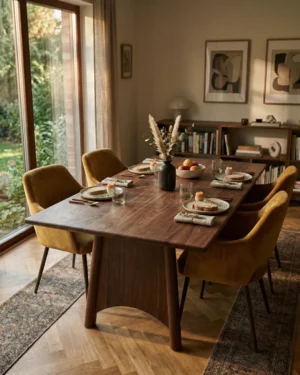
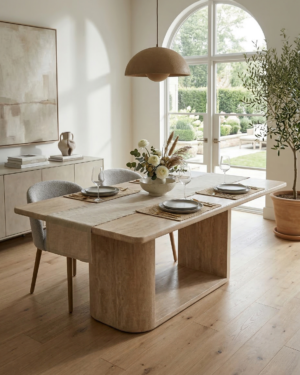
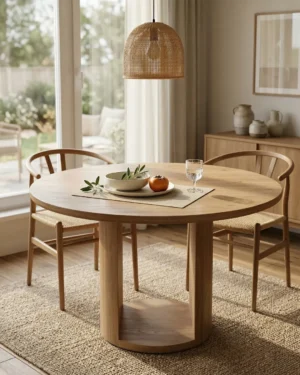
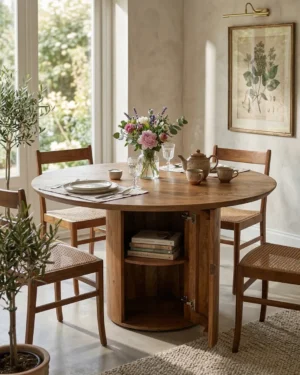
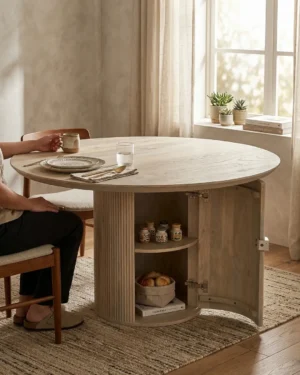
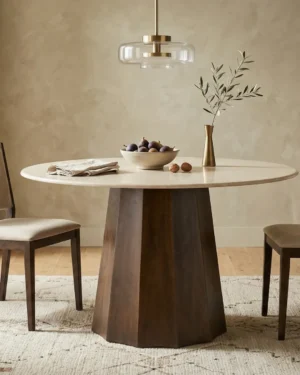
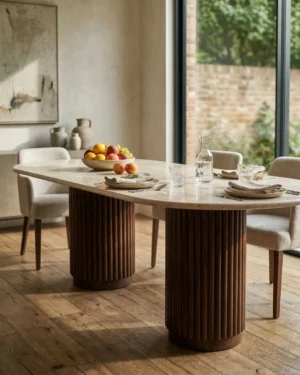
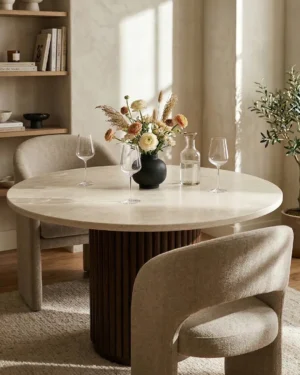
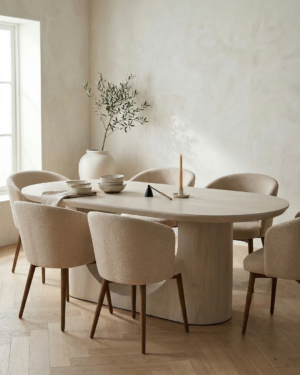
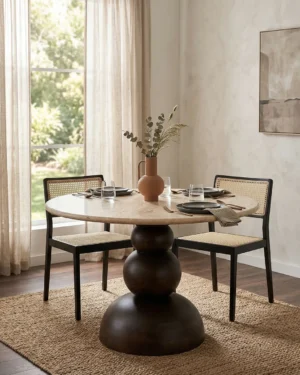
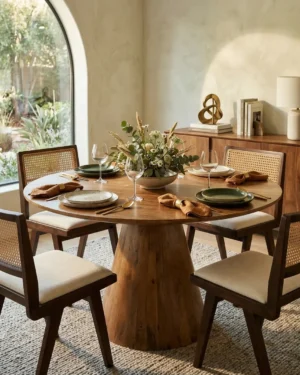
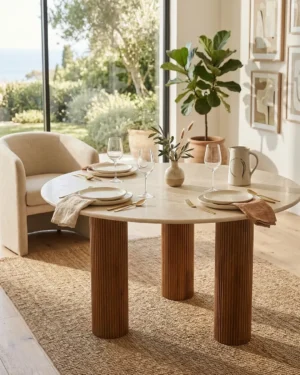
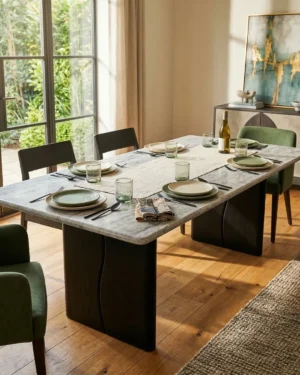
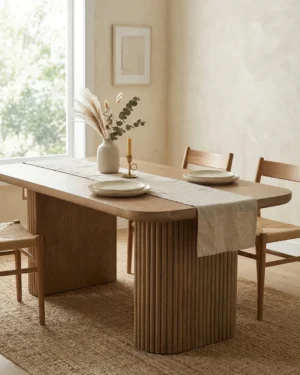
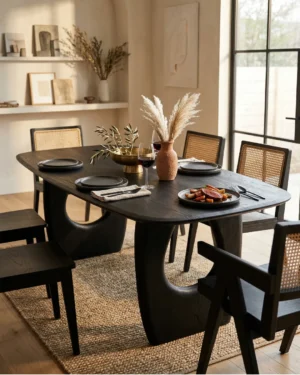
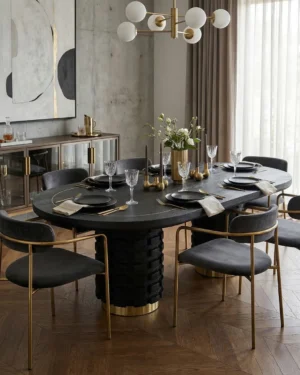
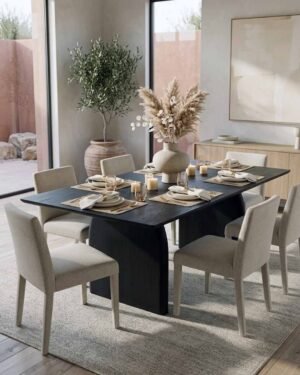
Explore a collection of dining tables online, built for contemporary homes across India. The range includes solid mango wood tables alongside sculptural marble and travertine designs in round, rectangular, oval, and pedestal forms. Whether you're setting up a compact 2-seater corner or a 6-seater table for regular hosting, each piece is designed and handcrafted in Jodhpur, with a focus on proportion, material, and everyday use.
ELVM's dining tables follow a contemporary, sculptural design language rather than a heavily ornamented one. The focus stays on proportion, silhouette, and material rather than added detail a quiet approach to design that suits modern Indian interiors, where the table often anchors the whole room.
A table's base shapes how it feels as much as its top does. A pedestal base opens up legroom and changes how the table reads visually. A four-leg base gives a more grounded, traditional feel. Material plays into this too a mango wood top brings warmth into a room, while a marble or travertine top gives a cooler, more sculptural presence. None are better or worse; they suit different rooms and routines.
Mango wood is one of the more practical choices for a dining table that sees daily use. Being a hardwood, it holds up well to regular wear, and its natural grain means no two tables look quite the same some run darker with tighter grain, others show more open, lighter patterning. This variation comes from working with a natural material, not a defect.
Not every table in the collection is solid wood several designs use marble or stone tops instead so it's worth checking the material listed on each product page before buying.
The collection also includes tables in Botticino marble, Italian Botticino, Italian travertine, Morchana marble, and sandstone. Each of these stones has its own character: Botticino tends toward warm beige tones with soft veining, travertine has a more textured, porous surface, and Morchana marble carries deeper, more distinct veining. As with wood, no two slabs are identical the natural variation in tone and veining is what gives a stone table its individuality.
Marble and travertine tables generally need slightly more care around spills and cleaning products than wood does, which is covered further down this page.
Round dining tables work well when a room needs to feel less boxed in. Without corners, a round table tends to open up circulation around it, which is useful in smaller or more square-shaped dining areas. It also puts everyone at the table roughly equal distance from each other.
Rectangular dining tables suit longer rooms and larger households, since they scale more naturally to seat more people without the table becoming unwieldy.
Oval and stadium-shaped tables sit between the two they keep a linear table for a longer room but soften the corners, which can reduce how heavy the table feels visually in the space.
Pedestal dining tables replace the usual four legs with a single central base. This changes how chairs sit around the table, since there's no leg to work around at each seat, and it also shifts how the table looks from across the room more sculptural, less structural.
Sculptural and curved designs move further from standard furniture shapes altogether, with organic or asymmetric forms that work as a design statement in the room, not just a place to eat.
Seating capacity is one of the first things to settle before choosing a table. As a general guide:
Exact dimensions vary by design and shape rather than following one fixed size for each capacity, so it's worth checking the specific dimensions on each product page.
The right dining table size depends on your available room space, seating requirement, and the clearance needed around the table. Across this collection, table length runs roughly 120–183 cm, width or depth roughly 90–127 cm, and height around 76 cmthough exact figures shift depending on the shape and base construction of each design.
Beyond the table's own footprint, it helps to account for chair depth, space to pull chairs out comfortably, and clearance from walls, doors, and nearby furniture. A table that fits on paper can still feel cramped if there isn't enough room to move around it. (For a closer look at planning this out, see our dedicated Dining Table Size Guide.)
Picking a dining table comes down to a few practical decisions, roughly in this order:
There's no single "best" material or shape here it depends on the room and how the table will actually be used.
| Factor | Mango Wood | Marble / Natural Stone |
|---|---|---|
| Appearance | Warm tone, visible grain | Distinct veining, cooler surface |
| Visual feel | Organic, inviting | Sculptural, refined |
| Care | Wipe spills quickly; avoid harsh or silicone-based cleaners. | Avoid acidic cleaners; wipe spills promptly. |
| Weight | Varies by construction | Generally heavier |
| Variation | The grain pattern varies piece to piece. | Veining and tone vary piece by piece. |
Neither material is objectively the better choice it comes down to how much upkeep you want to do and which one looks like your space.
Dining table prices vary according to material, dimensions, and design complexity. A pedestal or sculptural base typically involves more construction work than a straightforward four-leg design, and natural stone tops factor in the cost of the stone itself alongside finishing. Hand-finishing and craftsmanship also affect the final price. Current prices are shown on each product page.
Dust regularly with a soft, dry, or microfiber cloth. Blot spills as soon as they happen rather than wiping them across the surface. Use coasters and trivets under hot or wet items, and keep the table out of prolonged direct sunlight or heat, which can affect the wood over time. Avoid harsh, abrasive, or silicone-based cleaning products.
Blot spills quickly, particularly anything acidic. Avoid vinegar- or lemon-based cleaners, which can etch the stone surface. Use coasters and trivets as a habit rather than only for hot items, since natural stone is more reactive to everyday liquids than wood is.
Which material is best for a dining table?
It depends on the look and upkeep you're after. Mango wood gives a warmer, more forgiving surface for daily use, while marble and travertine offer a more sculptural finish but need more careful cleaning.
Is mango wood good for dining tables?
Yes. It's a durable hardwood with natural grain variation, and it holds up well to the wear a dining table sees regularly, provided spills are wiped promptly and harsh cleaners are avoided.
Is marble suitable for a dining table?
Yes, marble works well for a dining table, though it needs more attentive care than wood, particularly avoiding acidic spills and cleaners, which can mark the surface over time.
What size dining table should I choose?
Start with your room's measurements, then factor in how many people you need to seat and how much clearance you'll need around the table for chairs to move comfortably.
What is the standard dining table height?
Tables in this collection are generally around 76 cm high, which is the typical height for pairing with standard dining chairs.
Which dining table shape is best for a small space?
Round tables tend to suit smaller or squarer rooms best, since they don't have corners taking up extra floor space and allow easier movement around them.
What is the difference between a pedestal and a four-leg dining table?
A pedestal table has a single central base instead of four separate legs, which frees up legroom at each seat and gives the table a more sculptural look. A four-leg table has a more traditional, grounded structure.
Does ELVM Homes offer customization?
Customization is available on select designs, including color and finish options. Our team can also help with guidance on sizing, finish, and delivery for your specific space. Reach out before ordering to discuss what's possible for a particular table.