
Living Room Furniture for Modern Homes
Living room furniture does more than fill a room. It sets how the space is used every day, from how people sit and talk to how a TV corner or reading spot actually works. At ELVM Homes, the living room collection covers coffee tables, console tables, side tables and TV units, built with attention to proportion, material and finish. Whether you’re furnishing a compact apartment or a larger family room, the goal is furniture that fits your space and holds up to daily use, in wood, marble and other natural materials.
How to choose living room furniture that works for your space
Start with how the room is actually used, not just how it looks in a photo. If you host often, prioritize seating and a coffee table that can hold drinks and snacks for several people. If the room doubles as a TV space, plan the layout around sightlines to the screen first.
Measure the usable floor area, not just the wall-to-wall room size. Account for sofas, doors and the paths people walk through the room. Furniture should feel proportionate to the space, not simply large enough to fill it.
In smaller rooms, look for pieces with a lighter visual weight: slimmer legs, open bases, or curved forms that don’t block sightlines. Fewer, well-chosen pieces of small living room furniture usually work better than several small ones scattered around.
It also helps to plan around what’s already fixed in the room, like windows, radiators or a fireplace, before choosing new pieces. Furniture that works with these fixed points, rather than fighting them for space, tends to make a room feel more settled and easier to move around in.
Height matters more than people expect. A coffee table sits most comfortably at or just below sofa-arm height, and a side table works best when it’s roughly level with the arm of the chair beside it. Getting these small proportions right often does more for how a room feels than adding another decorative piece.
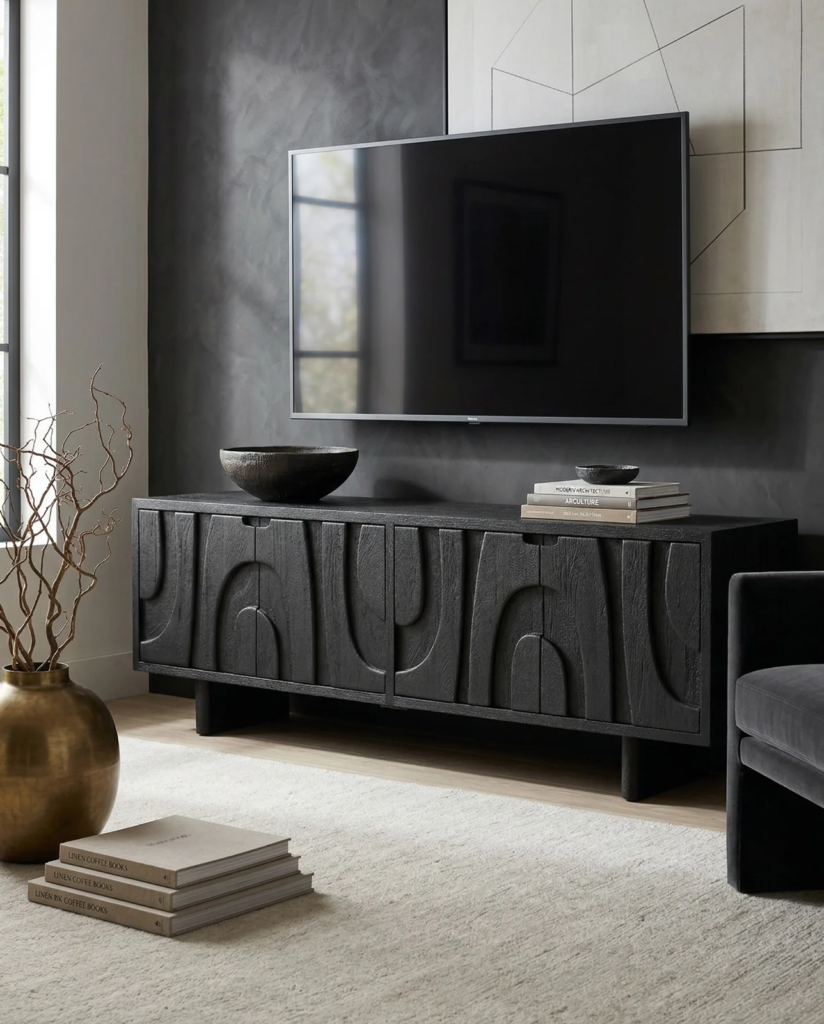
Explore living room furniture by type
Coffee tables
The coffee table usually anchors the seating area. It’s where daily life happens: cups of tea, laptops, magazines, someone’s feet after a long day. Shape and scale matter as much as looks. A round table works better for tight circulation, while a rectangular one suits a longer sofa. Material changes how the piece feels in the room: a marble top reads heavier and more formal, while wood keeps things warmer and more casual.
Console tables
A console table is a slim piece meant for walls, the space behind a sofa, or transitional areas like a hallway leading into the living room. It adds display and surface space without the bulk of a full cabinet. In rooms where a deep sideboard would feel heavy, a console keeps the space open while still giving you somewhere to put a lamp, books or decor.
Side tables
A side table sits beside a sofa or armchair and earns its place through convenience: a spot for a lamp, a drink, a book you’re halfway through. Because the footprint is small, side tables are especially useful in compact layouts, where a full-size coffee table doesn’t leave enough room to move.
TV units
A TV unit organizes the media side of the room and often becomes the visual anchor of the space, since it’s usually the largest fixed piece against a wall. Beyond holding the screen, it needs to handle storage and cable management while still working with the rest of the room’s materials and proportions.
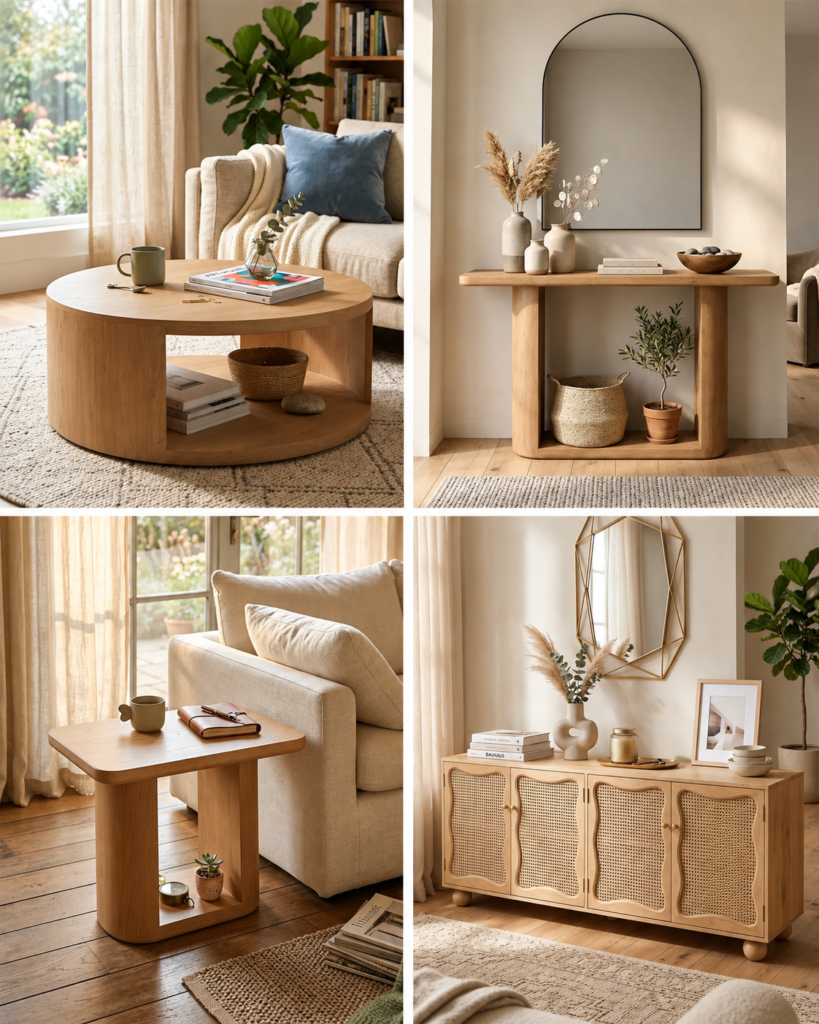
Modern living room furniture: creating a cohesive room
A cohesive room doesn’t require a matching furniture set. Repeating one or two visual cues, such as a wood tone, a curved silhouette or a stone finish, connects different pieces without making the space feel overly coordinated.
Balance matters more than matching. Pair a larger sofa with a lighter coffee table so the room doesn’t feel bottom-heavy. Use contrast deliberately: a dark wood console next to a lighter sofa, or a marble side table beside a fabric armchair, gives the eye something to notice instead of a flat, uniform look.
The most useful starting point is how the household actually lives in the room. A family that eats in front of the TV needs a sturdy, easy-to-clean coffee table. A room used mainly for reading and conversation can prioritize side tables and softer materials over a large central table.
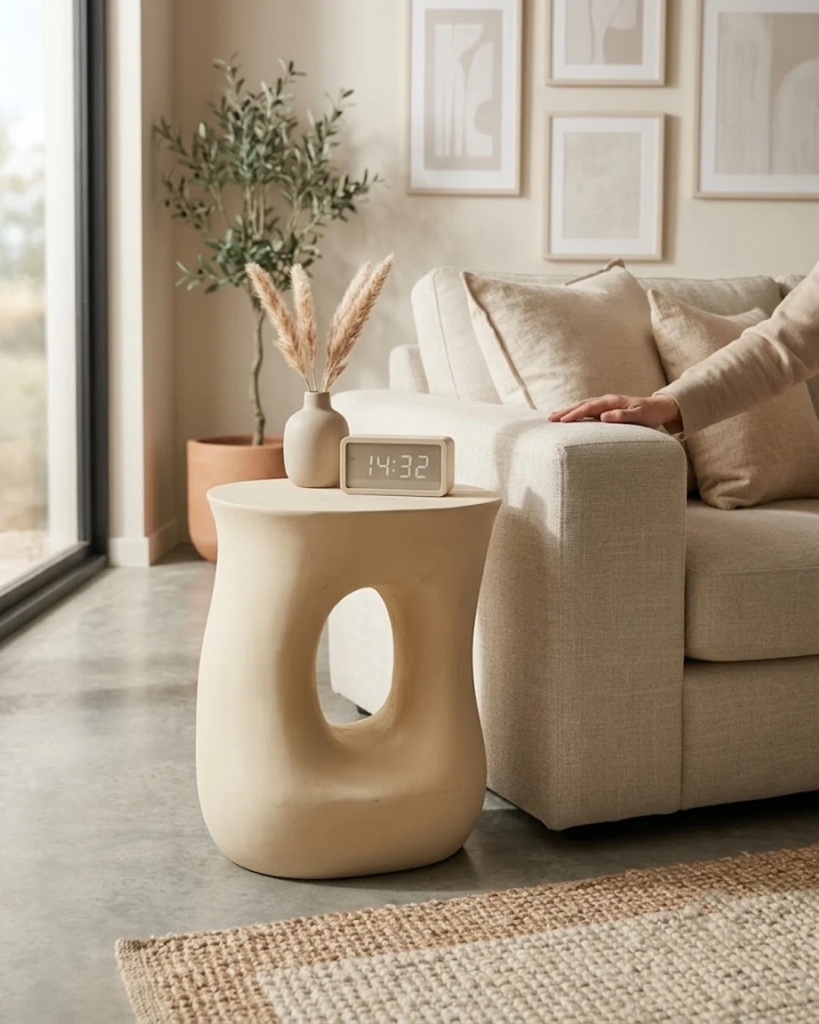
Wooden living room furniture and other material choices
Material changes how furniture behaves and how a room feels, so it’s worth choosing on purpose rather than by default.
Wood brings warmth and visible grain, and it tends to soften a room, which is why it’s a common choice for coffee tables, console tables and TV units. Marble and other natural stone add visual presence and a cooler, more formal feel; expect natural variation in veining and tone, since no two pieces are identical. Furniture that mixes materials, such as a wood base with a stone top, adds contrast and depth without needing extra accessories to do the work.
Always check the specific product page for the exact material used. Details like solid wood versus veneer, or the type of stone, vary between pieces and are worth confirming before you buy.
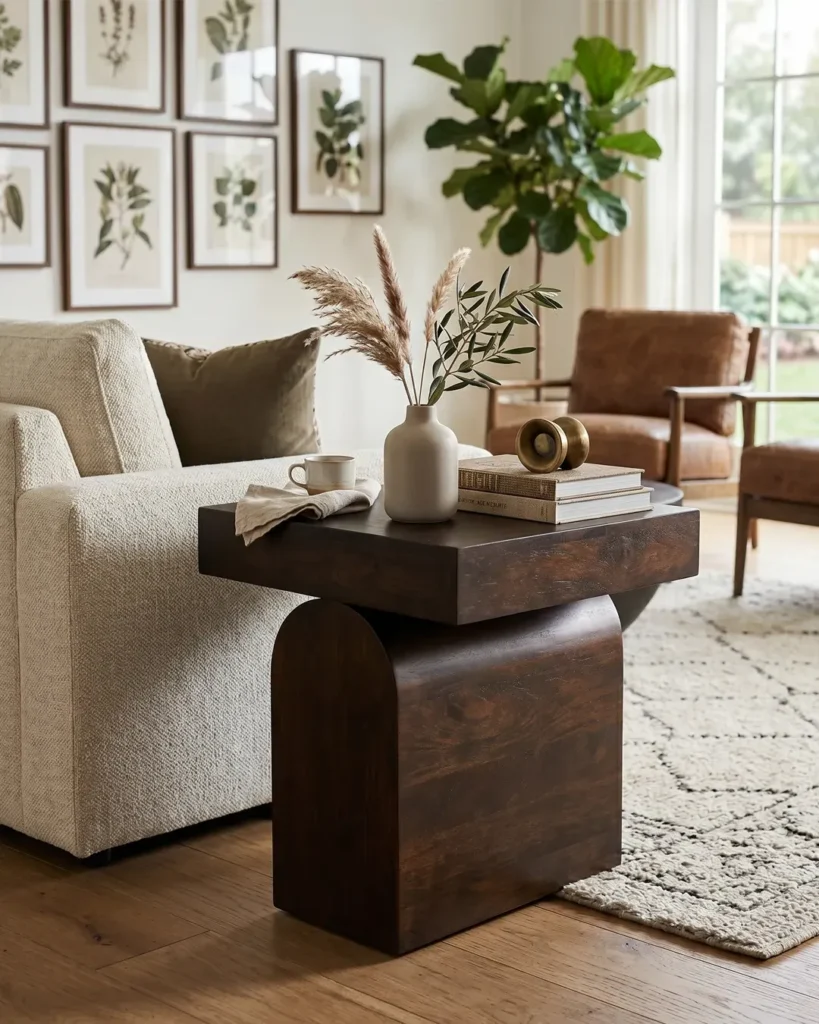
Living room furniture ideas for small spaces
Furnishing a small living room comes down to choosing fewer, better-scaled pieces rather than shrinking everything to fit.
A compact coffee table, sized to the sofa rather than the room, keeps the center of the space open. A slim console table can replace a bulkier storage unit where floor space is tight. Side tables are often more useful than a second large surface, since they take up less room while still giving you somewhere to put a drink or a lamp.
Keep an eye on circulation. Furniture that leaves a clear path between the door, the seating and the rest of the room will make a small space feel larger than one that’s simply packed with pieces. Where sharp corners make movement awkward in tight layouts, a rounded coffee table or side table can help.
What to check before buying living room furniture online
Before adding living room furniture to your cart, a few checks save returns and disappointment later.
Confirm the room dimensions against the product dimensions, including height and depth, not just width. If the piece needs to go through a doorway, up a staircase or in a lift, check that access before ordering. Read the material details and understand that wood grain and marble veining vary naturally between pieces, so the exact piece you receive won’t be identical to the photo.
Check the finish and color description carefully, since screens display color differently. Review care instructions so you know what the material needs day to day. Before checkout, confirm delivery timelines, return terms and warranty details on the shipping policy and help and FAQ pages, since these can vary by product.
Why choose ELVM Homes for your living room?
ELVM Homes designs furniture in-house, with a focus on clean proportions, contemporary forms and material character. Products go through multiple stages of quality control before they reach a customer, and materials are chosen with an eye toward how they’ll look and hold up over daily use, not just how they photograph.
The living room range is built around functionality first: pieces that work for the way people actually use a room, in forms that stay understated rather than trend-driven. If you’re unsure what will fit your space, you can share photos of your room for furniture recommendations before you commit to a purchase.
Comparing living room furniture types
| Furniture type | Best used for | What to check |
|---|---|---|
| Coffee table | Central seating area | Sofa scale, shape, space to move around it |
| Console table | Wall, hallway or behind the sofa | Depth, available wall width, intended use |
| Side table | Beside a sofa or chair | Height relative to seating, surface area, footprint |
| TV unit | Entertainment area | TV dimensions, storage needs, cable access |
A typical living room setup includes a coffee table, one or two side tables, a console table and a TV unit, though the exact mix depends on the room's size and how it's used.
Prioritize scale and circulation over quantity. A compact coffee table sized to your sofa, a slim console instead of a large cabinet, and one or two side tables usually work better than trying to fit in every piece at full size.
No. A room can feel cohesive through repeated materials, tones or shapes rather than an identical set. A shared wood finish or a recurring curve across a few pieces is often enough to tie the room together.
Yes. The form and finish of a piece matter as much as the material itself. A wood coffee table with clean lines and a simple profile reads as modern just as easily as one in metal or stone.
Confirm room and product dimensions, check access for delivery, review material and care details, and read the delivery, return and warranty terms before checkout.
Repeat one or two elements, such as a wood tone or a stone finish, across a few pieces, and use contrast deliberately elsewhere rather than trying to match everything.
Start with the largest or most central piece already in the room, usually the sofa, then build outward: a coffee table scaled to it, followed by side tables and a console or TV unit sized to the remaining space.